Most drivers only think about how a tow truck looks, not how the towing method affects the vehicle underneath. Yet the wrong approach can turn a simple breakdown into a transmission rebuild or a suspension repair that costs more than the original problem. Flatbed towing exists precisely to remove that risk by carrying your vehicle completely off the ground. For Kingston drivers who value their cars, understanding why this matters can save real money.
What Happens When Wheels Stay on the Road
When a vehicle is towed with two wheels still rolling on the pavement, those spinning wheels keep turning gears, shafts, and fluid pumps that were never meant to move without the engine running. In many automatic and all-wheel-drive vehicles, this circulates no lubricant, generating heat and wear in components that sit still by design. Over even a short distance on the 401, that friction adds up. The damage is often invisible until the transmission begins to slip weeks later. Front-wheel-drive and rear-drive cars alike can suffer when the driven wheels are left turning.
How a Flatbed Removes the Risk
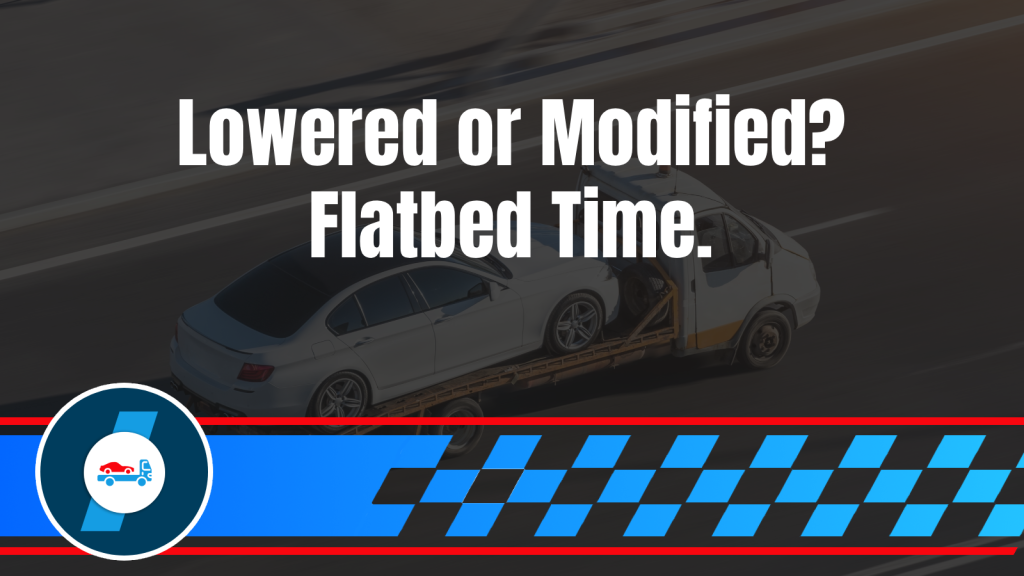
A flatbed, or rollback, lowers its deck to the ground and winches the vehicle fully onto the platform so all four wheels leave the road entirely. With nothing rotating and nothing dragging, the drivetrain stays completely at rest for the whole trip. That is why flatbed towing is the default recommendation for anything valuable, low-clearance, or mechanically fragile. The vehicle simply rides along as cargo rather than being dragged as a load. Nothing touches the pavement, so nothing wears where it should not.
Which Vehicles Need It Most
Some vehicles are far more vulnerable to tow-related damage than others, and their owners should insist on a flat deck every time. The list is longer than many people expect:
- All-wheel-drive and four-wheel-drive vehicles with linked axles
- Most modern automatics that share transmission and drive components
- Lowered, exotic, or low-clearance sports cars
- Electric vehicles that cannot freewheel safely
- Cars already damaged in a collision with bent suspension
When in doubt, a flat deck is always the safer choice for the vehicle.
Beyond the Drivetrain: Suspension and Alignment
Traditional hook-and-chain methods put stress on frames, control arms, and bumpers, and even modern wheel-lift towing loads the suspension unevenly. A flatbed distributes the vehicle’s weight across a solid platform, so nothing hangs, sags, or twists during the trip. This matters especially for older vehicles around Bath and Napanee where suspension components may already be worn. Protecting alignment on the way to the shop means one less repair once you arrive. For a vehicle you plan to keep for years, that protection is well worth the request.
When Kingston Drivers Should Insist on a Flatbed
If your vehicle has stalled on Highway 15, refuses to shift, or has been in a collision, a flat deck should be your first request. The same is true after a breakdown where the cause is unclear, because towing a mechanically uncertain car the wrong way only compounds the problem. A reputable dispatcher will ask about your drivetrain before sending equipment. If they do not, it is fair to ask for a flatbed yourself.
Protect Your Vehicle From the Start
The few extra minutes it takes to send the right truck are far cheaper than a drivetrain repair. When you need a tow anywhere around Kingston, Gananoque, or Belleville, call Towing Kingston at (613) 777-5664 and ask about flatbed towing. We will match the equipment to your vehicle so it arrives exactly as it left.