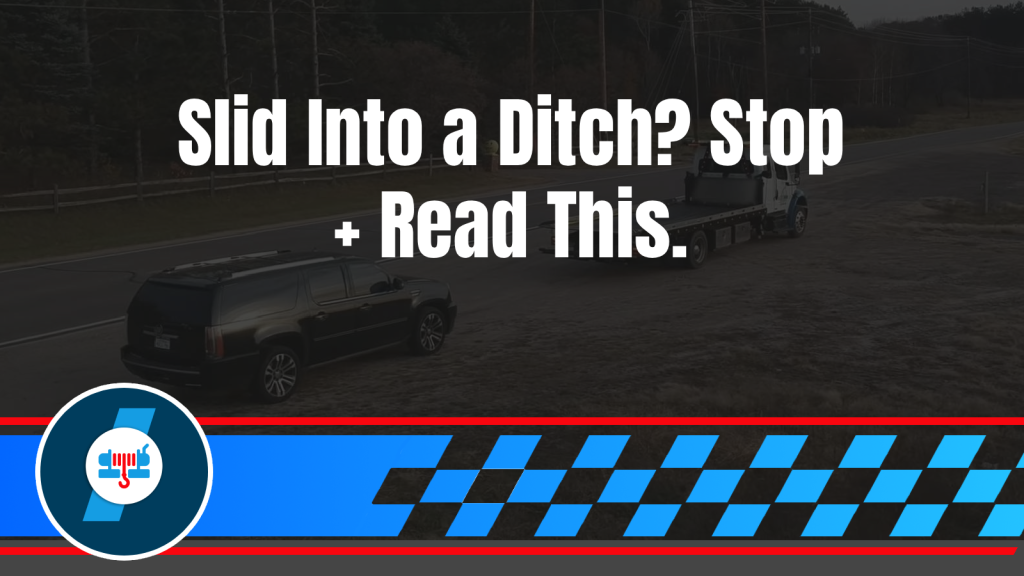
A patch of black ice on Highway 401 or an unplowed rural shoulder near Kingston can put your car in the ditch in seconds. One moment you are driving normally, and the next your wheels are spinning uselessly in snow, mud, or a steep grade. If you have never been through a professional recovery before, the whole situation can feel intimidating and confusing. This guide walks you through exactly what to expect, from the moment you slide off the road to the moment your vehicle is safely back on solid pavement.
First Steps Before Help Arrives
Your safety matters far more than your vehicle, so the first thing to do is stay calm and take stock of your surroundings. If your car has come to rest in a risky spot along a busy stretch like the 401 or Highway 15, switch on your hazard lights and stay buckled inside unless there is an immediate danger such as smoke or fire. When it is genuinely safe to exit, step well away from moving traffic and stand on the far side of any guardrail. Note your location using nearby exits, mile markers, or landmarks so you can describe it clearly when you call.
What Happens When You Call
When you reach our dispatch team, we ask a few quick questions so we can send the right equipment on the first trip. We want to know your location, the type of vehicle you drive, how far off the road you have slid, and what the ground looks like around you. A sedan resting on a snowy shoulder calls for a very different approach than an SUV nose-down in a muddy ditch outside Napanee. Sharing these details up front means our operator arrives prepared rather than needing to return with different gear.
Assessing the Scene on Arrival
Once our recovery operator reaches you, the work does not begin with immediate pulling. First we study the angle of your vehicle, the ground conditions, and any obstacles such as fences, trees, or hidden drop-offs. We check whether your wheels, axles, or undercarriage are resting against anything that might catch during the pull. This assessment protects your car and everyone at the scene, and it usually takes only a few minutes before the real recovery begins.
How the Recovery Is Performed
Getting a vehicle out of a ditch is rarely as simple as hooking a cable and pulling straight backward. Our operators rely on controlled winching, snatch blocks, and careful positioning to guide your car along the safest possible path. Several factors shape the plan we choose:
- The steepness and depth of the ditch or embankment
- Whether the ground is frozen, muddy, or loose gravel
- The weight and drivetrain of your vehicle
- Available anchor points for the winch and recovery truck
- Traffic conditions on the surrounding road
Our winching and recovery service is built around techniques that free your vehicle while keeping stress off its frame and body panels.
Inspecting Your Vehicle Afterward
Once your car is back on the pavement, the job is not automatically finished. We look for signs of trouble that could make driving unsafe, including bent wheels, punctured tires, leaking fluids, or a bumper packed with snow and debris. If everything checks out, you may be clear to drive away on your own. If not, we can load your vehicle onto a flatbed and transport it to your home, mechanic, or dealership anywhere around Kingston.
Off the Road Near Kingston? We Can Help
Sliding into a ditch is stressful, but the recovery itself does not have to be. Our team serves Kingston, Gananoque, Bath, and the surrounding highways with around-the-clock 24-hour towing and recovery support. Call us any time at (613) 777-5664 and let our recovery specialists get you moving again.