When people picture accident towing, they imagine a damaged car being winched onto a truck and driven away. The reality is far more involved, and much of the important work happens before the vehicle ever moves. Accident scenes are chaotic and dangerous, and a professional operator handles a whole series of steps that most drivers never see. Understanding them shows why experience matters so much in the minutes after a collision.
Securing the Scene First
Before anything else, an accident scene has to be made safe. That means positioning the truck to shield the area, setting out cones or flares, and staying visible to oncoming traffic, which is critical on fast, busy roads like the 401 near Kingston. A second collision at an accident scene is a very real danger, and preventing it protects everyone involved, from the drivers to the first responders. Only once the area is controlled does the actual recovery begin.
Working Alongside Emergency Services
At a serious crash, a tow operator is one part of a much larger team. Police, paramedics, and firefighters may all be present, and the operator coordinates with them rather than working around them. That can mean waiting for an investigation to finish, following directions about where vehicles can be moved, and staying clear until the scene is formally released. This cooperation keeps the process orderly, lawful, and safe for everyone on site. Trying to rush this stage helps no one and can interfere with an active police investigation.
Debris Removal Most Drivers Overlook
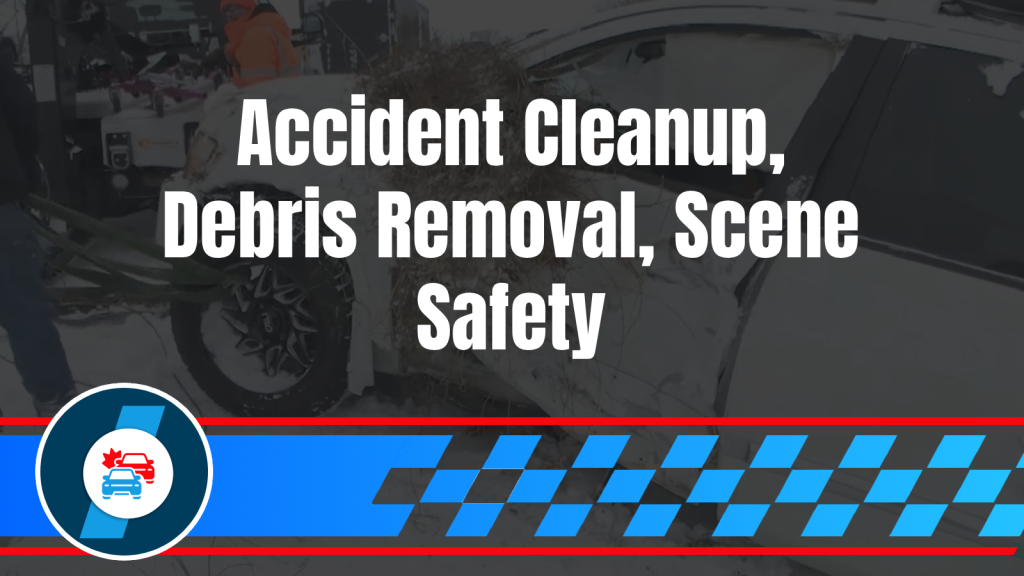
A collision scatters far more than just crumpled metal across the road. Broken glass, plastic fragments, fluid spills, and detached parts all pose hazards to other drivers if they are left behind. Part of a proper accident response is clearing this debris so the road is safe to reopen. Fluid spills in particular need careful handling, since oil or coolant on the pavement can cause further accidents long after the vehicles are gone.
Documentation That Protects You
Careful record-keeping is one of the most valuable and least visible parts of the job:
- Photographs of the vehicle and its position before removal.
- Notes on the visible damage and the scene conditions.
- A clear record of where the vehicle is being taken.
- Details that are useful for police and insurance follow-up.
- Straightforward paperwork handed to the vehicle owner.
This documentation supports your insurance towing claim and helps everything that follows go more smoothly.
Careful Recovery and Transport
Loading a damaged vehicle is rarely straightforward. Bent panels, seized wheels, or leaking fluids all complicate the process, and forcing it risks causing even more damage. A skilled operator chooses the right equipment and technique for the vehicle’s condition, often using a flatbed to avoid adding further stress. From the crash site to the shop or yard, the goal is to move the car without compounding the harm already done. A rushed load can bend a frame or crack a bumper that was otherwise salvageable, so a little patience genuinely pays off.
Dependable Accident Towing in Kingston
A collision is stressful enough without worrying about what happens to your vehicle afterward. Handled properly, the scene is made safe, the road is cleared, and your car is documented and moved with care. Our team supports drivers throughout Kingston and along the highways nearby. Call (613) 777-5664 for professional accident towing whenever you need it.