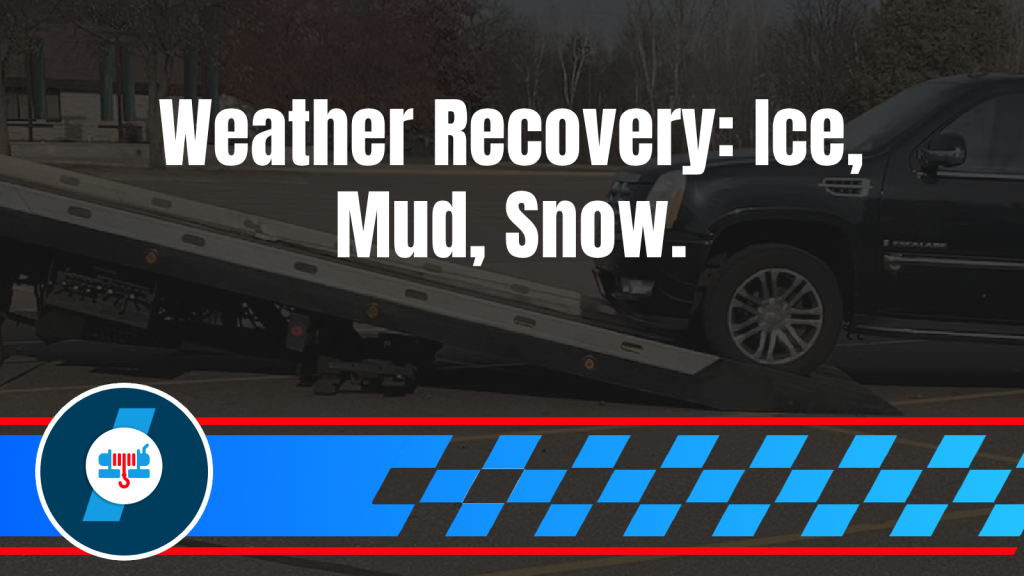
Weather does more than make driving harder; it fundamentally changes how a stuck vehicle gets recovered. Ice, mud, and heavy snow each create their own obstacles, and each demands a different approach from a recovery operator. Around Kingston, where lake-effect snow and spring thaw are simply facts of life, understanding these conditions helps you know what to expect. It also explains why acting quickly can make the entire job easier and safer. Here is how the elements shape a recovery and why the clock matters.
How Ice Complicates a Recovery
Ice removes the one thing every recovery relies on, which is traction. A vehicle resting on a glassy surface can slide unpredictably the moment tension is applied, and the recovery truck needs secure footing of its own. Operators plan anchor points and pull angles carefully so nothing slips sideways during the process. Freezing rain can also coat door handles and locks, adding delay before work even begins. That deliberate setup is why an icy recovery takes patience rather than brute force.
Mud and Spring Thaw Challenges
When the frost leaves the ground around Napanee and the surrounding countryside, roads and shoulders can turn to deep, sucking mud. Tires sink, suction grips the undercarriage, and the more a driver revs, the deeper the vehicle settles. A recovery in these conditions calls for steady winching from firm ground rather than a quick yank. The recovery truck itself must stay on solid footing so it does not get stuck too. Reaching the vehicle before it sinks further keeps the whole job manageable.
Snow, Whiteouts, and the 401
Heavy snow and blowing whiteouts along the 401 create some of the toughest recovery conditions in the region. Reduced visibility makes the scene hazardous for everyone, and buried vehicles can be hard to locate and rig safely. Operators must work quickly but carefully, with constant attention to passing traffic that may not see them in time. Snowbanks left by plows can hide exactly how deep a vehicle is stuck. In these moments, a coordinated and professional response is absolutely essential.
Why Timing Changes Everything
The longer a vehicle stays stuck, the more the weather works against a clean recovery. Snow keeps piling up, mud pulls the vehicle deeper, and dropping temperatures turn slush into stubborn ice. Calling early, while conditions are still workable, usually means a faster and less complicated job. Waiting also means longer exposure to cold and to the dangers of a roadside position. Delay rarely improves the situation and almost always makes it worse.
What You Can Do Before Help Arrives
A few sensible steps keep you safe and speed the recovery once the truck arrives.
- Turn on hazard lights so others can see your position
- Stay inside the vehicle if you are near moving traffic
- Note nearby landmarks or exits to help the operator find you
- Avoid revving the engine, which only digs you in deeper
- Keep your phone charged and describe the conditions clearly
Call Towing Kingston When Weather Strands You
Bad weather does not wait, and neither should you. Reach Towing Kingston at (613) 777-5664 for skilled winching and recovery and fast emergency towing whenever ice, mud, or snow leaves you stuck. Our team understands how local conditions affect a recovery and responds with the right plan for the moment. Save our number now so a sudden storm never leaves you waiting alone.